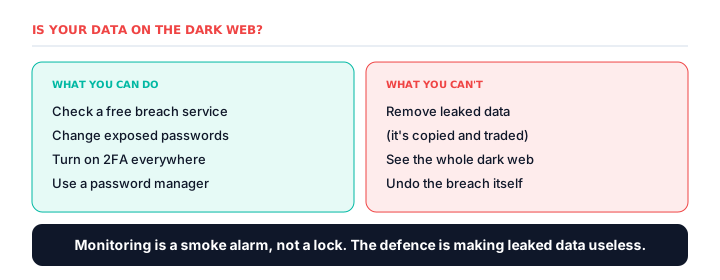
Dark web monitoring continuously checks whether your details appear in known breaches and alerts you — a useful early-warning tool, but a smoke alarm, not a lock. It can't prevent leaks, remove leaked data, or see the whole dark web. For individuals, free tools like Have I Been Pwned cover the core function, so paid services mainly add convenience. The real protection — unique passwords and 2FA — is free.
- It watches for your data in known breaches and alerts you
- It's a smoke alarm, not a lock — it can't prevent or remove leaks
- “Nothing found” doesn't mean you're safe
- Free tools cover the core function for individuals
- Real protection is free: unique passwords and 2FA
Dark web monitoring is sold heavily — by banks, antivirus suites, and identity-protection services — often with alarming ads implying it will keep your data safe. It's a useful service with a specific, limited value, and understanding exactly what it can and can't do saves you from both overpaying and false comfort.
What it actually does
Dark web monitoring continuously checks whether your details — email, passwords, card numbers — appear in known breach collections and data dumps, and alerts you when they do. That's genuinely useful: early warning lets you change a password before it's abused. It's the same core function as the free Have I Been Pwned, with continuous watching and alerts added.
What it can't do
It's a smoke alarm, not a lock. It tells you data has leaked if matching credentials or identifiers appear in the limited breach databases, paste dumps, or log collections we can scan. It cannot prevent the leak before it happens, cannot remove exposed records from third-party forums, paste sites, or marketplaces, and cannot see the entire dark web or every private Telegram channel, forum, or hidden service. “Nothing found” means “not in what we scanned at this time,” not “you're safe” or “your data hasn't been exposed.” Any wording that suggests it blocks attacks, deletes stolen data, or gives full dark-web visibility is overselling the tool.
Is it worth paying for?
For most individuals, the free tools cover the core function, so a paid subscription mainly buys convenience: continuous alerts, a dashboard, and bundled extras like identity-theft insurance. That can be worthwhile if you value the automation, but the protective work — changing passwords, enabling 2FA — is something only you can do, paid service or not. For businesses, professional monitoring has clearer value: watching for leaked corporate credentials and early signs of a breach at scale.
The honest verdict
Dark web monitoring is a legitimate early-warning tool, not a shield. It's useful if you understand it as an alarm that prompts you to act. What actually protects you is free: unique passwords via a manager, and two-factor authentication everywhere.
Frequently asked questions
Is dark web monitoring worth it?
It's a useful early-warning tool but a smoke alarm, not a lock. For individuals, free tools like Have I Been Pwned cover the core function, so paid services mainly add convenience and alerts. The real protection — unique passwords and 2FA — is free.
What does dark web monitoring actually do?
It continuously checks whether your details — email, passwords, card numbers — appear in known breach collections and data dumps, and alerts you when they do, giving early warning to change a password before it's abused.
Can dark web monitoring remove my data?
No. No service can remove leaked data — once it's out, it's copied and traded beyond recall. Monitoring only tells you data has leaked; the protective response is to change passwords and enable 2FA.
Is free dark web monitoring good enough?
For most individuals, yes. Free tools like Have I Been Pwned and the breach checks built into browsers and password managers cover the core function. Paid services add continuous alerts and extras, not a fundamentally better check.
Do businesses need dark web monitoring?
Professional monitoring has clearer value for businesses: watching for leaked corporate credentials and early signs of a breach at scale, which feeds into stopping intrusions before they become incidents.